Meet Apollo: the University of Sydney’s GPU platform for AI-driven research
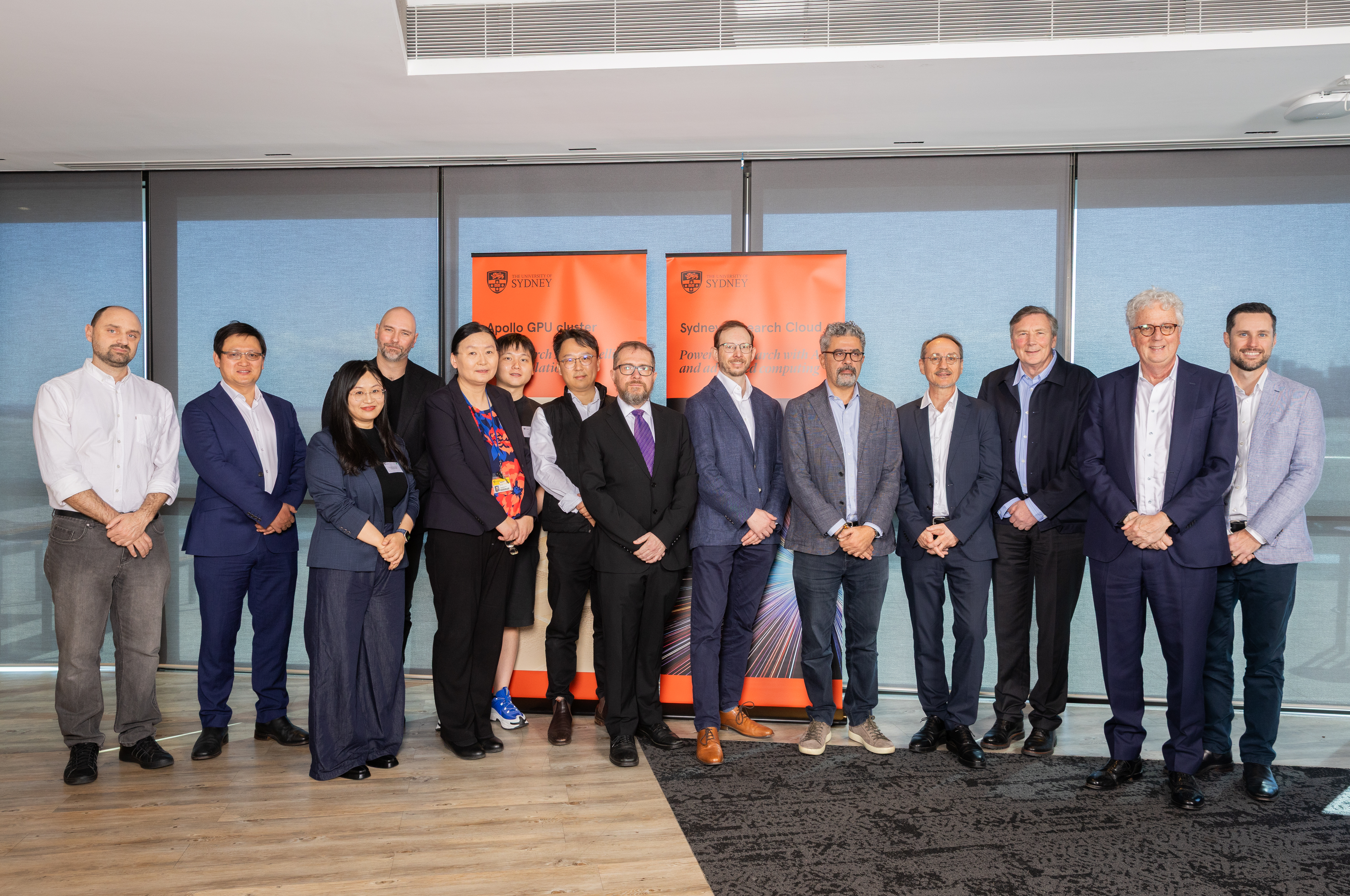
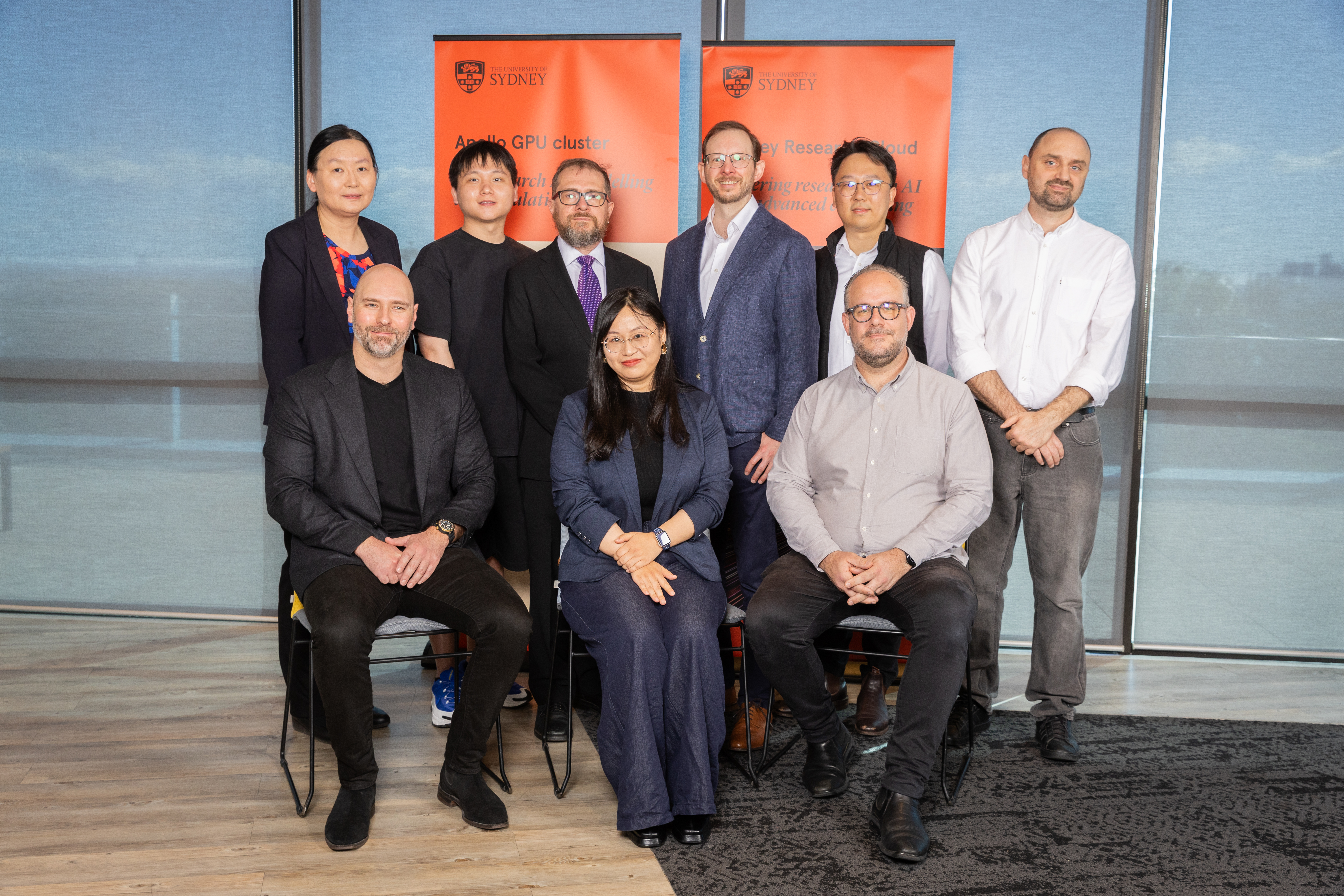
On Thursday 3 September 2026 I attended the launch of Apollo, the University of Sydney’s new GPU platform for AI-driven research, at the Sydney Informatics Hub Auditorium (Moore College, Newtown). The event was organised by the University’s Core Research Facilities.
Apollo is a GPU cluster built for research AI, modelling and simulation, and it sits alongside the Sydney Research Cloud as part of the University’s research computing offering. The launch brought together the teams behind the platform and a series of short research highlights showing how different disciplines are already putting the cluster to work.
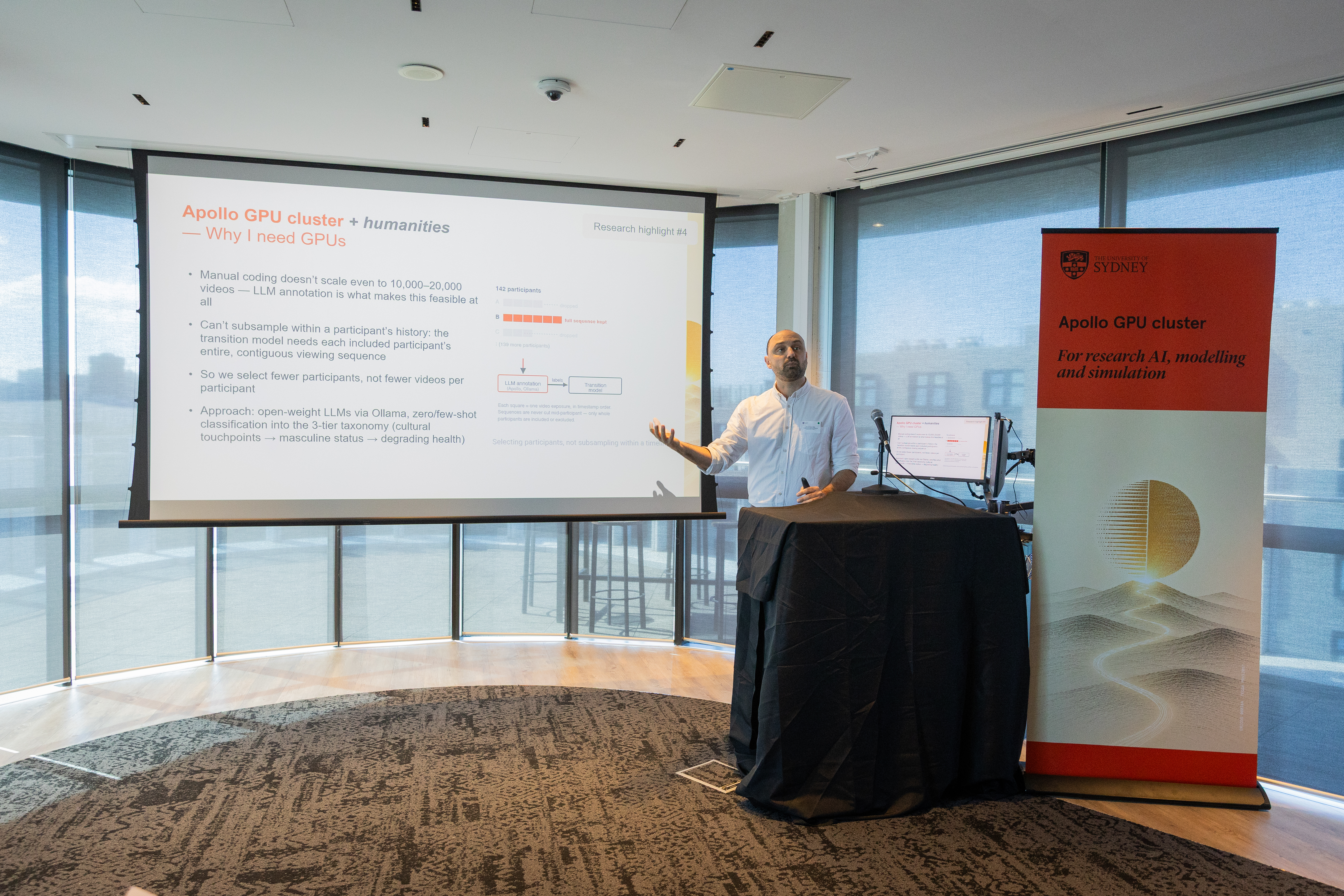
I gave one of the research highlights, on why a humanities project needs GPUs. The broader point is that large language models — and especially multimodal models that read text, images and video together — open a new way to bridge qualitative and quantitative research. Interpretive coding that used to be done by hand on a few hundred cases can now be applied, consistently, at a scale that lets us quantitatively interrogate massive datasets of texts and videos: annotating each item against a theory-driven scheme, then modelling the resulting structure.
In our project this means using an LLM to annotate a corpus of potentially 100,000+ TikTok videos — a volume that manual coding could never reach — and running open-weight models on Apollo to do it.