Presentation @ ASQPS 13: Information disorder on Facebook around the 2020 US Presidential election
Information disorder—characterized by contradictory claims within digital information environments—undermines democratic deliberation in ways that traditional misinformation research cannot adequately capture. We develop a scalable framework for measuring disorder based on semantic relationships between information units (infons), without requiring truth adjudication. Applying large language models to classify relationships among 969,207 Facebook posts from 38,149 accounts during the 2020 U.S. presidential election period (October 26–December 1, 2020), we construct temporal networks of agreement and disagreement.
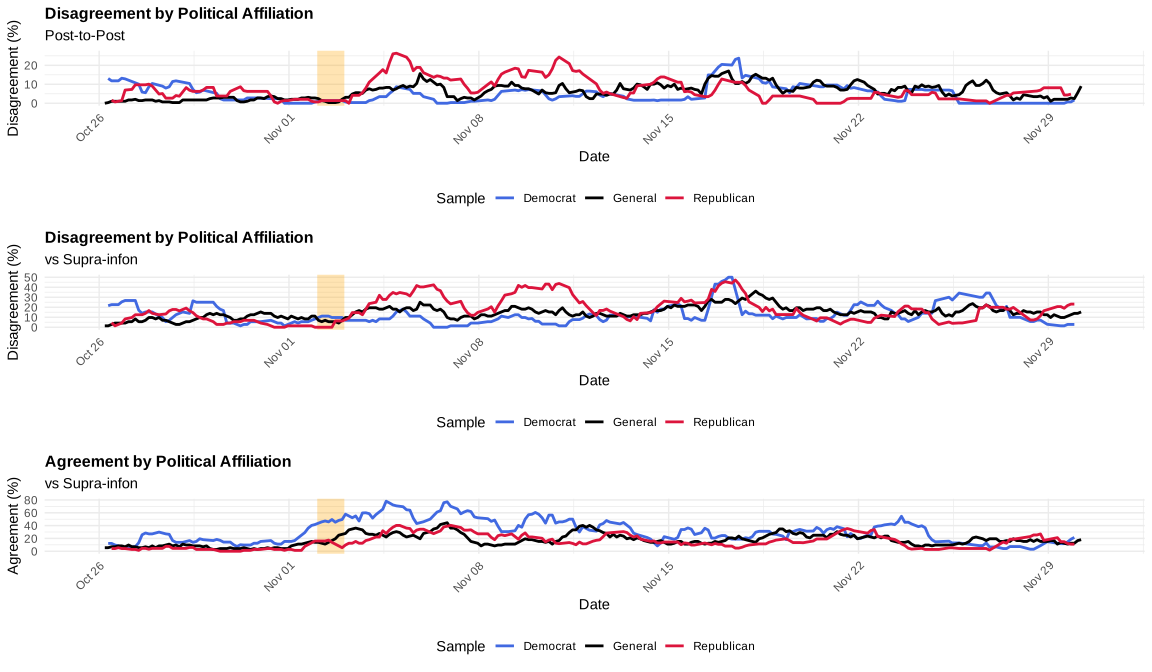 Figure 1. Temporal dynamics of disagreement across general and partisan samples.
Our findings reveal three key patterns. First, internal disagreement increased sharply following Election Day, with Republican-affiliated accounts exhibiting substantially higher disorder than Democrat accounts (see Figure 1). Second, stance toward election legitimacy diverged markedly along partisan lines: Democrat accounts maintained consistent agreement that the election was conducted fairly, while Republican accounts exhibited sustained disagreement. Third, and most critically, posts expressing skepticism toward election fairness achieved significantly greater viral reach than those affirming it across all partisan contexts, suggesting that platform dynamics systematically amplified disorder-generating content (see Figure 2).
These findings demonstrate the utility of network-based measures for diagnosing information ecosystem health and reveal how algorithmic amplification may exacerbate democratic information crises. Our framework provides policymakers and platform designers with actionable metrics for assessing information environment quality without requiring contested judgments about truth.
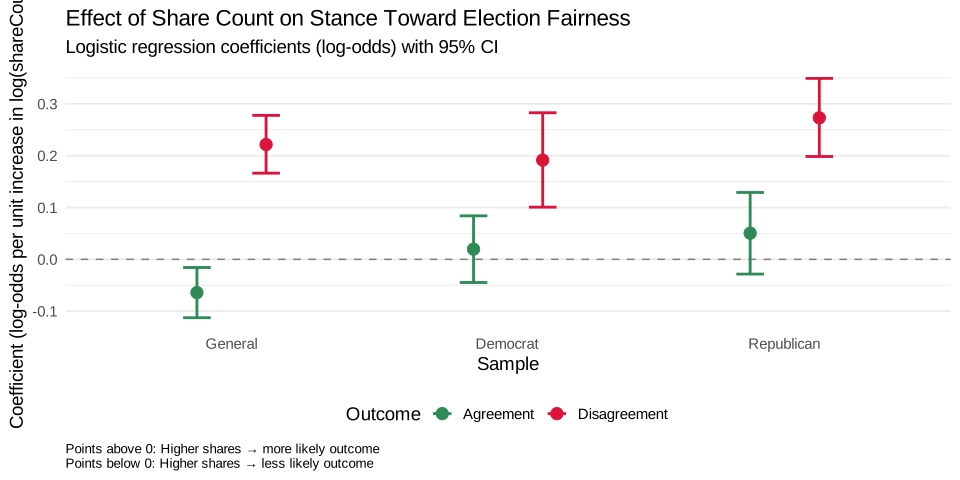 Figure 2. Association between share count and stance toward election fairness across partisan samples.
Keywords: information disorder, computational social science, LLM, large language models, social media, electoral integrity, platform governance